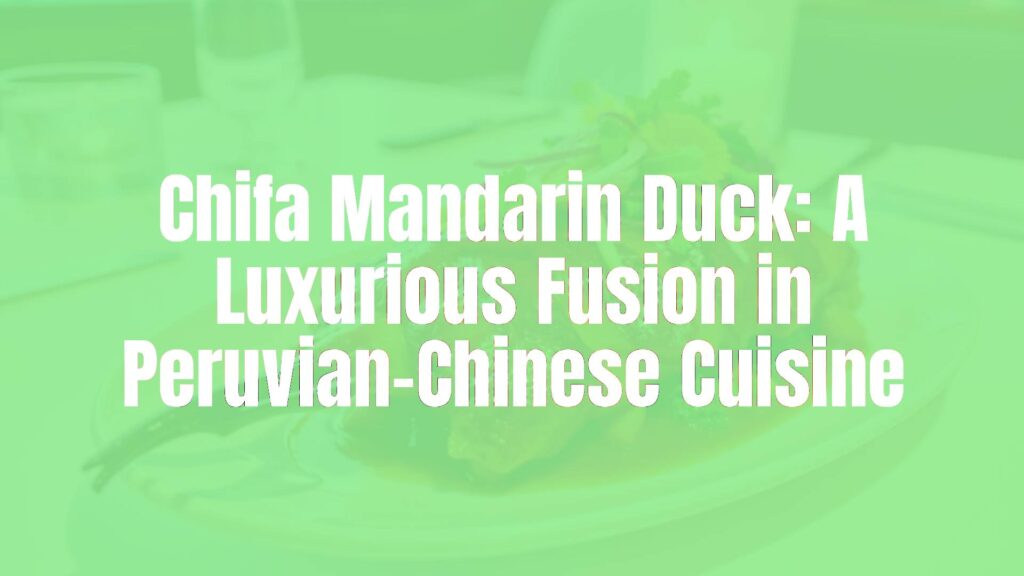
Exploring Chifa Mandarin Duck
Chifa Mandarin Duck stands out as one of the more elegant and celebrated dishes in the world of Chifa cuisine—the unique culinary tradition born from the blending of Cantonese Chinese and Peruvian gastronomy. Esteemed for its rich flavors and refined presentation, this dish showcases both traditional Chinese preparation methods and Peruvian ingredients, resulting in a memorable culinary experience.
The Place of Mandarin Duck in Chifa Tradition
Duck has long been a prized poultry in Chinese cooking, frequently associated with festive meals and special gatherings. In Peru, the adaptation of duck into Chifa menus brings an air of sophistication and indulgence, making Chifa Mandarin Duck a signature main course, especially in upscale Chifas (Peruvian-Chinese restaurants). It often features as a centerpiece for celebrations or family banquets, reflecting the dish’s roots in communal dining and culinary artistry.
Key Ingredients and Distinctive Flavors
Chifa Mandarin Duck typically begins with duck as the star protein, noted for its rich, succulent meat and crisp, flavorful skin. The dish is infused with a blend of Chinese seasonings—such as soy sauce, five-spice powder, and hints of ginger—layered with Peruvian touches like local aji amarillo peppers or sweet native fruits. Some versions may incorporate mandarin orange or a citrus-based glaze, lending a balance of sweetness and acidity that beautifully complements the duck’s depth.
Accompaniments often include lightly sautéed vegetables, Peruvian potatoes, or fried rice, reflecting the Chifa tradition of combining Chinese ‘main and side’ format with New World produce. Garnishes like scallions, cilantro, and sometimes sesame seeds add freshness and an aromatic lift.
Preparation Approach and Culinary Techniques
The preparation of Chifa Mandarin Duck draws on both Chinese culinary heritage and Peruvian influences. Commonly, the duck is marinated for hours with a mixture of aromatics—ginger, garlic, and soy-based sauces—then slow-roasted or steamed to achieve a succulent texture. The use of glazing, often with a citrusy or fruit-based sauce, imparts a shiny finish and intriguing sweet-sour profile. Part of the allure lies in crisping the duck skin perfectly, which requires advanced skill and careful handling.
Serving and Enjoyment
This dish is traditionally served carved, allowing diners to share and savor both the tender meat and crispy skin. It is a popular choice for group dining, whether among families or at business banquets. In Chifa restaurants, Mandarin Duck is often paired with side dishes—stir-fried greens, chaufa (fried rice), or even steamed buns—to fully round out the meal. The bright, fragrant sauce is spooned over each piece, elevating the overall flavor profile.
Health and Dietary Considerations
Duck is richer and more caloric than other poultry, offering generous protein and essential fats, but also higher cholesterol. The dish’s sauce may include sugar or fruit purees, enhancing the sweetness. Diners seeking lighter fare or lower-fat options can request less sauce or avoid consuming the skin, though this means forgoing much of the classic texture and flavor.
Cultural Importance in Peruvian-Chinese Fusion
Chifa Mandarin Duck exemplifies the fusion ethos at the heart of Chifa cooking, where Chinese technique meets Peruvian flavors and local ingredients. Its presence on a menu signals not only culinary skill but also a respect for both traditions. As a dish that bridges continents, Mandarin Duck remains a symbol of celebration, hospitality, and innovation in Peru’s ever-evolving food scene.
