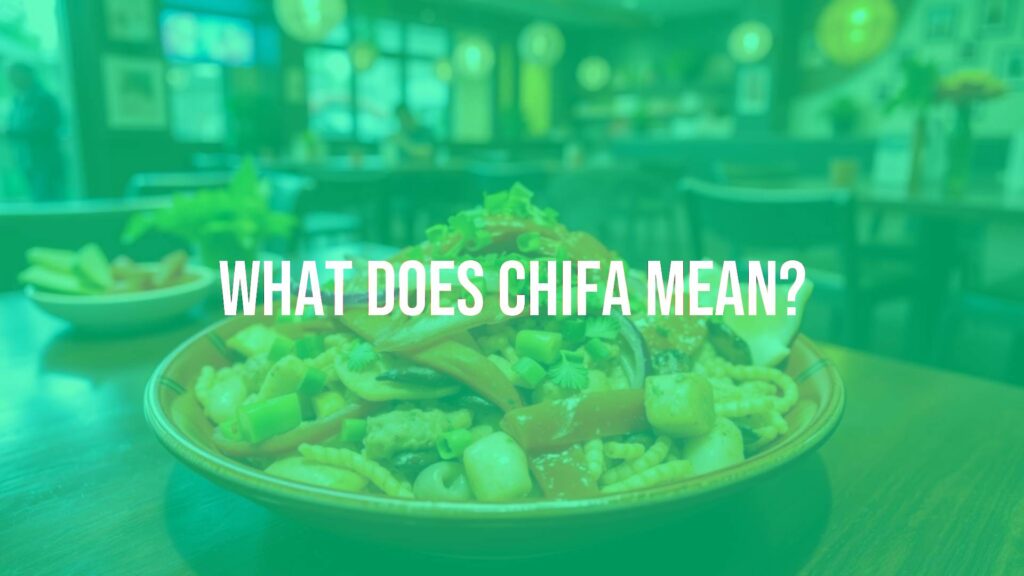
What does “chifa” mean? At its core, chifa is a lively food tradition from Peru that mixes Cantonese Chinese cooking with local Peruvian flavors and ingredients. The word “chifa” not only describes this unique style of cooking but also the places-restaurants-where the food is served. Chifa grew out of exchanges between Chinese immigrants and Peruvians, and today, it’s one of the most well-liked and common types of food throughout Peru.
This style of cooking is more than just meals-it tells a story of history, movement, and cultures coming together. Whether you’re in the busy city streets of Lima or a small town in the countryside, chifa is a familiar sight and a part of daily life. It represents the journey of people moving from China to Peru, eventually creating a new food tradition that is clearly Peruvian but also contains Chinese roots.

What does chifa mean?
The term “chifa” has interesting roots tied to Peru’s Chinese community. It’s more than a word related to food; it shows how two cultures once separated by distance became connected through everyday life.
Where does the word ‘chifa’ come from?
Most believe “chifa” comes from the Cantonese saying 食飯喇 (sik9 faan6 laa3), which means “let’s eat” or “time to eat rice.” According to the Comisión Lexicografía de la Academia Peruana (CLAP), people in Lima in the 1930s would hear Chinese individuals call out this phrase at mealtime, and it soon was adapted by Peruvians as “chifa.” Over time, it came to describe both the special Chinese-Peruvian restaurants and the food they offered.
Similarly, the common chifa dish “chaufa” (fried rice) gets its name from the Cantonese words 炒飯, pronounced as “caau3 faan6” or “chaofan.” These language changes highlight how smoothly Chinese culture became a part of Peruvian life-especially in cooking.

How is chifa a part of Peruvian life?
Chifa is not just another restaurant-it’s a social place in Peru where families and friends come together to enjoy big, flavorful meals. Chifa eateries are everywhere, from big city districts to small neighborhoods, sometimes with several on the same block. This shows how much chifa is really a part of Peruvian society.
Chifa is popular for its big servings and fair prices. It’s a perfect option for groups, and many families, especially on Sundays, gather at chifa restaurants for meals that can include a dozen or more people. Chifa is for everyone, with budget spots for everyday meals and some fancy ones too. Lima has more than 6,000 chifa restaurants, pointing to how central chifa has become to eating in Peru-it’s not just a passing trend, but a big part of national culture.

Where did chifa start?
Chifa’s beginnings are closely tied to Chinese immigrants coming to Peru-an important time in history that shaped this food fusion.
A short history: Chinese immigration to Peru
The first notable group of Chinese people arrived in Peru around 1849. These workers came to fill jobs that were hard to fill after slavery was ended-doing tough work on railroads, farms, mining, and collecting guano. Most came from southern China, mostly from the Guangdong province, where Cantonese is spoken.
The work was difficult and didn’t pay well, and contracts lasted as long as eight years. After their contracts ended, some workers stayed in Peru, mainly around the coast and in Lima, where they started new lives. They had to change their cooking because they could not always find Chinese ingredients, so they used local Peruvian foods. Sometimes, they even planted Chinese vegetables with seeds they brought from home. This was the beginning of the chifa style.

How chifa food changed over time
Chifa became what it is today as Chinese immigrants-many good at cooking or running businesses-opened their own small restaurants. Around 1920, these first fusion restaurants, known as “chifas,” began in Lima’s Chinatown near Capon Street. What was once an area for livestock turned into the lively starting place of chifa in Peru.
At first, chifa restaurants mostly served the Chinese community, but later, wealthy people from Lima were drawn in by the new smells and tastes-like sweet sauces, fried rice (chaufa), and various soups. Local chefs started to use ingredients like ginger, soy sauce (called “sillao” in Peru), and scallions in their own Peruvian recipes. The mix of stir-frying in a wok and local Peruvian flavors soon created a new food style. Over time, chifa moved from being something new to a favorite across Peru.
How did chifa become a mix of Peruvian and Chinese styles?
Chinese ingredients now common in Peru
Chinese immigrants brought with them their own foods and cooking styles. At first, it was hard for them to find familiar ingredients, but they found ways to add items like ginger (called “quión”), scallions, and soy sauce (“sillao”) to the Peruvian kitchen. Using the wok and stir-frying soon became popular too, even showing up in famous Peruvian dishes like Lomo Saltado.
Chifa didn’t just bring in new tastes; it also started using Peruvian ingredients, such as potatoes, pineapple, and aji amarillo (yellow chili pepper paste). The two-way exchange led to a special food tradition-rich in taste, colorful, and full of spices-from both cultures.

The first chifa restaurants in Lima
The earliest chifa restaurants, which started to appear around 1920 in Lima’s Chinatown, played a big role in this food fusion. With names like Ton Kin Sen, Thon Po, Men Yut, and San Joy Lao, these spots were popular and even featured live music at times.
These places introduced locals to new flavors and quickly became favorites. Dishes such as arroz chaufa (fried rice), various soups, and sweet-and-sour recipes became hits. What began as something “exotic” soon became a key part of everyday eating in Peru, leading to the thousands of chifa restaurants in the country today.
Why is chifa important in Peru?
For Peruvians, chifa isn’t just food. It’s a regular part of life and celebration, enjoyed by people from all backgrounds.
Popularity of chifa restaurants
Chifa restaurants are common all over Peru, especially in Lima, where you’ll often see several on one block. This means chifa is one of the most popular foods in the country.
From budget-friendly eateries to expensive restaurants, chifa is for everyone. If you are in Peru, it’s just as easy to find chifa as it is to find a traditional Peruvian meal, and in some areas, there are even more chifas than criollo restaurants.
Chifa for big groups and parties
Large portions and reasonable prices make chifa the go-to food for groups and special events. Sundays are known for families gathering-sometimes 10, 20, or more-at chifa spots. Because of this, it’s normal to see packed restaurants with people waiting. Eating chifa is about sharing many dishes, like arroz chaufa or tallarín saltado (noodle stir-fry), as a group, making it perfect for celebrations or get-togethers. Chifa fits with Peru’s love of sharing meals together.

Chifa throughout Peru
Lima’s Chinatown is where chifa started, but now chifa dishes are eaten everywhere in the country-even in places that aren’t special chifa restaurants. Recipes are often changed to fit what’s grown locally-sometimes even using meats like guinea pig or jungle animals. With these regional twists, chifa has become a truly national food style, always adjusting and growing but still loved everywhere.
Has chifa spread outside of Peru?
Chifa is mainly Peruvian but has begun spreading to other countries, thanks to Peruvians living abroad and the rise of Peruvian cuisine around the world.
Chifa in nearby countries
Today, you can find chifa restaurants in countries near Peru like Ecuador, Chile, and Bolivia, thanks to continued movement and sharing of culture. Some Chinese immigrants have opened these fusion restaurants since at least the 1970s. There are even chifa spots in Spain, where there are many Peruvian people. These new restaurants show that chifa’s flavors and cooking methods appeal to people well beyond Peru.
Chifa compared to other fusion foods
| Type | Base & Influence | Main Differences |
|---|---|---|
| Chifa | Cantonese Chinese + Peruvian | Deeply mixed; part of daily life in Peru; uses Peruvian ingredients like potatoes, chili, seafood; eaten by everyone. |
| Nikkei | Japanese + Peruvian | Often high-end; blends Japanese precision and seafood with Peruvian spices; less commonly found in daily meals. |
| Chinese Takeout (Global) | General Chinese + Local country | Usually keeps mostly Chinese identity; sometimes changes flavors for local tastes; often seen as “ethnic” or special, not fully blended. |
Chifa stands out from many other food fusions because it isn’t just about using Chinese cooking in a new place-it’s a true mix, made to fit with Peruvian tastes and ingredients. It is very different from a regular “Chinese takeout” place, and is considered a genuine part of Peru’s food scene.
Frequently asked questions about chifa
Do you only find chifa in Peru?
Chifa started in Peru, and Peru still has the most chifa restaurants-Lima alone has over 6,000-but you can find chifa in other countries too, like Ecuador, Bolivia, Chile, and Spain, mostly where there are Peruvian communities. Peruvian food is now spreading more around the world, so you might see chifa growing in other places as well.
What’s different about chifa compared to regular Chinese food?
Chifa takes Chinese cooking (mostly Cantonese style) and blends it with Peruvian ingredients and tastes. It keeps some basics like using a wok and ingredients such as soy sauce, ginger, and scallions, but mixes in things like aji amarillo, potatoes, or even guinea pig in some regions. Chifa dishes can also taste more spicy, fresh, or have different textures than typical Chinese food. They show a balance-mixing the deep flavors of Chinese methods with local, sometimes bold Peruvian tastes. Lomo Saltado, for example, combines stir-fried beef and vegetables with French fries and local seasonings-a perfect example of chifa’s blended roots.